
Abandoned Cart Recovery: A Practical Guide for WooCommerce, Shopify and Webflow Stores
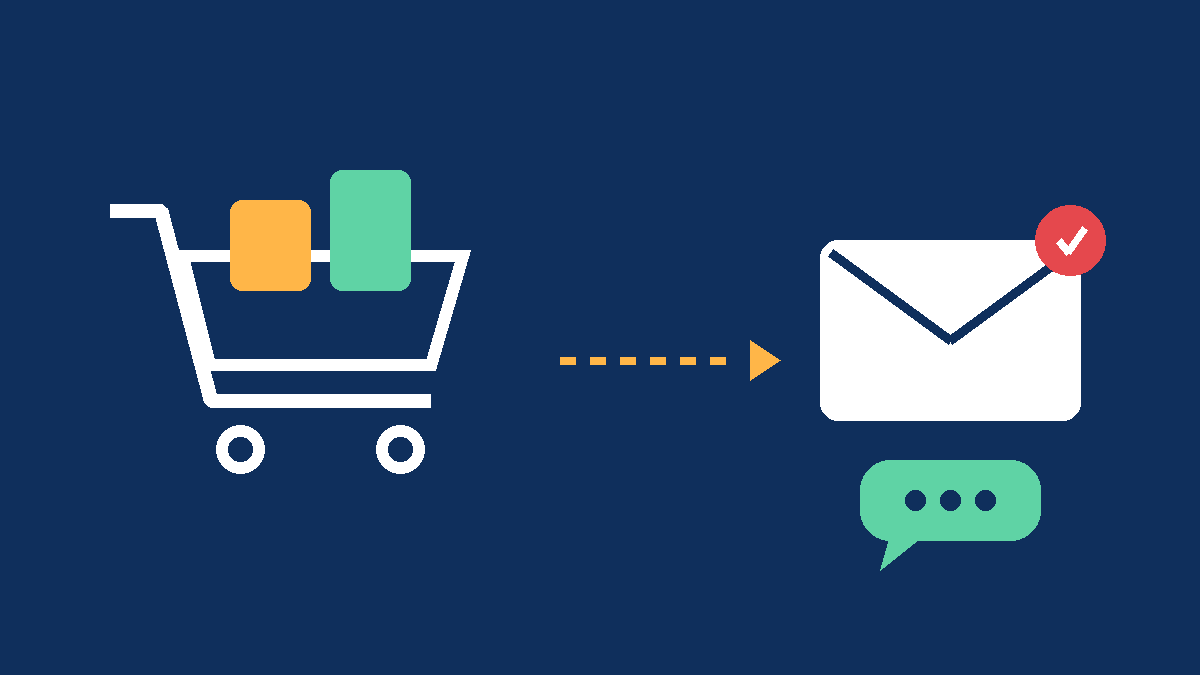
Effective abandoned cart recovery comes down to three things: capture the shopper's email or phone number early in checkout, send a short sequence of two or three messages within 48 hours, and follow the consent rules of the markets you sell to. Set up properly, it is the highest-earning ecommerce automation per recipient.
According to the Baymard Institute, which averages 50 studies, roughly 70% of online shopping carts are abandoned. A better checkout lowers that number, but some shoppers will always leave: a phone call, doubts about sizing, a quick price comparison. Recovery messages bring them back at the right moment.
This guide is for store owners, marketing teams and startups selling on WooCommerce, Shopify or Webflow. It covers timing, copy, platform-specific setup and the consent rules that tightened in Europe in 2026.
Abandoned cart vs. abandoned checkout: what you can actually recover
"Abandoned cart" is used for two different situations. In the first, a visitor adds a product and leaves without sharing any contact details. Unless they are a logged-in customer or subscriber, you cannot reach them. In the second, they start checkout and enter an email or phone number. That abandoned checkout is what recovery flows target.
Shopify's help page on abandoned checkouts spells it out: a checkout counts as abandoned when it stays incomplete for more than ten minutes after the customer enters an email address. The practical takeaway is simple. The earlier you ask for the email, the more orders you can win back, so make email (or phone) the very first checkout field.
How much abandoned cart emails really earn
Klaviyo's 2026 Abandoned Cart Benchmark Report, published in October 2026 and based on more than 110,000 brands, provides useful reference points:
| Abandoned cart flow metric | SMS | |
|---|---|---|
| Average click rate | 6.0% | 10.3% |
| Top 10% click rate | 11.3% | 18.5% |
| Average revenue per recipient | $6.77 | $4.48 |
| Top 10% revenue per recipient | $13.70 | $8.69 |
Klaviyo reports that abandoned cart is the flow with the highest average revenue per recipient on both channels. Keep in mind that these figures come from an email platform vendor and skew towards English-speaking markets. Treat them as a benchmark, then measure your own numbers.
Consent rules to check before your first reminder
Many stores skip this step, and it matters more in 2026 than before. What follows is general information, not legal advice.
France and the wider EU
In its guidance on electronic communications, updated in June 2026, France's data protection authority CNIL restates that marketing emails and texts to consumers require prior consent. The exception is an existing customer receiving offers for similar products. CNIL adds that creating an account does not make someone a customer. Transactional messages such as order confirmations need no consent, but they can be reclassified as marketing if they carry promotional content. CNIL does not mention cart reminders by name, yet a message designed to push a purchase sits close to marketing.
Germany
As reported by Haufe, the North Rhine-Westphalia data protection authority (LDI NRW) stated in its 2025 activity report that cart reminder emails are advertising and require express consent. Its suggested approach is an unticked checkbox, ideally confirmed with double opt-in.
Tunisia and WhatsApp
In Tunisia, Organic Law No. 2004-63 on personal data protection governs how customer contact details are collected and used. On WhatsApp, the WhatsApp Business Policy requires the person's permission before a business messages them. Whatever the market, the safest setup is the same: a clear consent checkbox at checkout, a privacy notice and an unsubscribe link in every message.
A proven three-message recovery sequence
You do not need five emails. A short, well-spaced sequence works for most stores. Klaviyo suggests a pattern close to this one:
| Message | Sent after abandonment | Channel | Content |
|---|---|---|---|
| 1. Reminder | 2 to 4 hours | Product image and name, direct link back to the cart, offer of help | |
| 2. Reassurance | 24 hours | Email or SMS | Shipping, returns, payment options, genuine customer reviews |
| 3. Last call | 48 hours | Low stock if true, optionally a targeted incentive |
Stop the sequence automatically the moment an order is placed. Few things hurt a brand more than a "you forgot something" email that lands right after payment.
Writing an abandoned cart email that converts
Subject line and first screen
Keep it plain: "Your cart is waiting" or "Did you forget something?" beats clickbait. The first screen should show the product photo, the price and a single button that opens the cart with items already restored.
Answer the likely objection
Shoppers mostly leave because of extra costs, delivery times or a lack of trust. Use the second message to remove those doubts: clear shipping costs, delivery time by region, a one-line returns policy and a contact that actually answers.
Use discounts sparingly
An automatic discount teaches customers to abandon carts and wait for a code. Keep incentives for the final message, for higher-value carts or for first-time buyers, and consider non-price perks such as free shipping or a gift when margins are tight.
Setting up cart recovery on WooCommerce, Shopify and Webflow
WooCommerce
WooCommerce has no built-in cart recovery, so you need a plugin. The free Cart Abandonment Recovery for WooCommerce, from the team behind CartFlows, lists more than 300,000 active installations. MailPoet 5.29, released in June 2026, also ships ready-made abandoned cart emails. For advanced workflows with SMS, segments and conditions, AutomateWoo, WooCommerce's paid automation extension, remains a solid choice. Whatever you pick, test it with your checkout (classic or block-based) and every payment gateway you use.
Shopify
Shopify includes recovery out of the box. Under Apps > Messaging > Automations, the "Abandoned checkout emails by Shopify" automation lets you choose the delay and recipients. Shopify notes that no email is sent if the customer entered a phone number instead of an email, if shipping is not available to their address or if items are no longer available. Abandoned checkouts are deleted after three months. For SMS or more granular flows, an app such as Klaviyo takes over.
Webflow
Webflow Ecommerce has no native cart recovery. The request has sat on the Webflow Wishlist since 2019, and the Monto integration that once filled the gap is now deprecated. The workaround is custom development: capture the email before payment, store the cart contents, then trigger the sequence in an email platform through an automation service. If recovery is central to your business model, weigh it when choosing a platform, as explained in our Webflow Ecommerce features and limitations guide.
| Criterion | WooCommerce | Shopify | Webflow |
|---|---|---|---|
| Native recovery | No | Yes (email) | No |
| Typical solution | Free plugin, MailPoet or AutomateWoo | Shopify automation, Klaviyo | Custom development |
| SMS and WhatsApp | Plugins or APIs | Apps | Third-party tools |
| Setup effort | Low to medium | Low | High |
Example: a fashion store selling to Tunisia and France
Consider an illustrative case: a WooCommerce fashion store based in Tunis. Local customers mostly pay cash on delivery and rarely give an email, while French customers pay by card and expect GDPR-compliant messaging.
- Put the phone or email field first at checkout, with an unticked checkbox to receive a reminder.
- Send the first reminder by email when an address exists, otherwise a short SMS after a few hours.
- For high-value carts, let customer service follow up by phone or WhatsApp, only where the shopper agreed to it.
- Repeat delivery times and payment options (cash on delivery locally, card for Europe) in every message.
- Track the recovery rate for a month before introducing any discount.
To fix leaks before the reminder stage, read our 12 WooCommerce checkout fixes to reduce cart abandonment.
How to measure cart recovery performance
- Recovery rate: the share of abandoned checkouts that convert after a reminder.
- Recovered revenue: sales attributed to the flow, ideally compared with a holdout group.
- Click rate per message: shows which step of the sequence does the work.
- Unsubscribes and complaints: a warning sign that the flow is too pushy.
Be careful with attribution: some shoppers would have returned anyway. A 10% holdout group that receives nothing gives the most honest measure. To put these numbers into a broader plan, see our ecommerce CRO framework.
Common mistakes to avoid
- Asking for the email at the end of the form, when it is too late to recover.
- Sending reminders to European shoppers without consent.
- Linking to an empty cart.
- Offering a discount in the very first message.
- Continuing the sequence after an order or an unsubscribe.
- Forgetting to retest the flow after plugin or theme updates.
Conclusion: win back sales without pushing customers away
Abandoned cart recovery is not a marketing trick. It is a service for a shopper who was interrupted. Capture contact details at the right moment, send a short and helpful sequence, collect consent properly and measure honestly, and you will recover a real share of lost sales on WooCommerce, Shopify or Webflow. With Black Friday close, it belongs on your Black Friday ecommerce checklist.
Our team builds and optimizes WooCommerce, Shopify and Webflow stores for clients in Tunisia and Europe, from checkout and automation to compliance and performance. Explore our WooCommerce development services and our ecommerce development offer, or send us your store URL for a review of your recovery flows.