
Restaurant Website in Tunisia: Menu, Booking and Local SEO
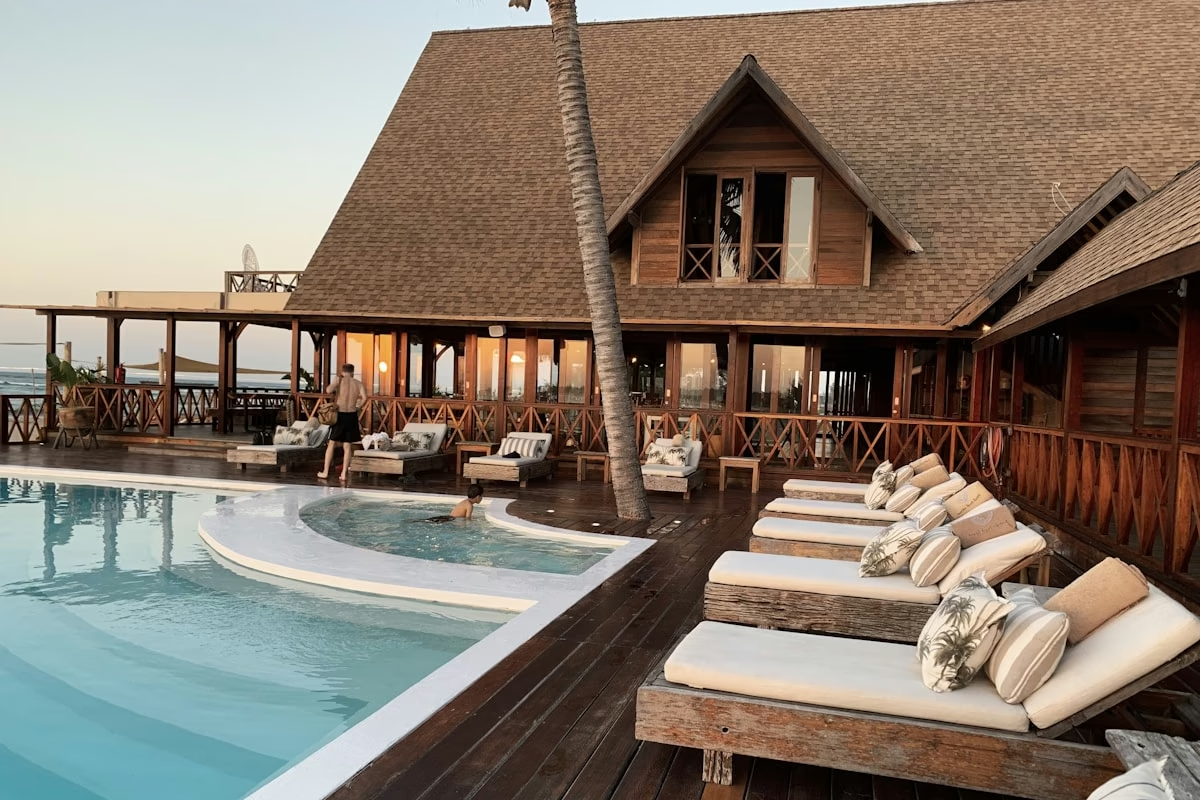
A restaurant website should explain the experience, show a readable menu, provide practical details and make mobile booking straightforward.
A customer usually discovers a restaurant with an immediate goal: find somewhere for lunch, compare nearby options, check the menu or reserve a table for the evening. The website must answer quickly, especially on mobile.
Good photography is not enough when opening hours are difficult to find, the menu cannot be read or the booking button is missing. The project has to connect content, user experience, local visibility and the restaurant’s own operating process.
Our restaurant website-development service in Tunisia can be adapted for an independent restaurant, café, bakery or multi-location group.
Put essential information and actions first
Visitors usually want to:
- understand the cuisine and atmosphere;
- read the menu and prices;
- find the opening hours and address;
- call or book;
- check delivery or collection options;
- see recent photographs;
- find information about groups, events or dietary needs.
Place these actions in a clear hierarchy. On mobile, Menu, Directions, Call and Book can be available quickly. Avoid an animated introduction that delays practical information.
Publish a menu that works on mobile
A PDF can be useful as a download, but it should not be the only version. A multi-column PDF often requires zooming on a phone. Publish the main categories and dishes in HTML with readable prices and descriptions.
The CMS should make it straightforward to change a price, hide a dish or add a set menu. Decide who performs those updates. An outdated menu creates a poor experience before the customer has even visited.
Publish only information the establishment is ready to stand behind: important ingredients, allergens according to an approved process, vegetarian options, availability and conditions. Avoid unverified health or safety statements.
Use current, purposeful photography
Images should represent the current experience: dishes, dining room, terrace, team and details. Prepare a shot list instead of photographing without a plan.
Compress files and provide suitable image sizes. Use a descriptive filename and useful alternative text when the image conveys information. Decorative photographs do not need a list of keywords.
Connect each image to its context. A brunch photograph is more useful beside the brunch offer than inside a gallery of fifty unexplained images.
Google’s image SEO guidance explains how HTML elements, surrounding context and alternative text help search engines understand an image.
Choose the right booking process
Three approaches are common:
- Telephone or WhatsApp: simple, but dependent on staff availability.
- An enquiry form: records details and requires manual confirmation.
- Instant booking: must understand tables, opening times, sitting duration and availability.
The website must state whether the request is confirmed. “We will reply” is not a reservation. Ask for the number of guests, date, time, contact details and any information that is genuinely useful.
Test confirmations, cancellations, reminders and notifications. Check full days and requests outside opening hours. If a third-party service is used, document the subscription, data handling and support arrangements.
Build a trustworthy local presence
Create a page that genuinely describes the restaurant: cuisine, experience, location, access and services. Use the city name naturally in the heading and practical information. A long list of neighbourhoods without useful content does not improve the experience.
Keep the same name, address, phone number and opening hours on the website and business profile. Add recent photographs and respond to reviews professionally. Google explains how to establish official information in its guide to business details.
For a restaurant with several locations, create a useful page for each address with its menu, hours, contact details and distinguishing features. Do not create locations that do not exist.
For a deeper process, read our local SEO guide for Tunisian SMEs.
Keep structured data consistent with the page
Structured data can help search engines understand the business type, address, opening hours and other visible details. It must match the page exactly.
Do not add invented reviews or ratings copied without context. Structured data does not replace visible content, and its presence does not guarantee a particular Google result.
Test the markup after launch and monitor Search Console. When opening hours change, update both the page and the associated data.
Localise for the restaurant’s real audience
A restaurant serving tourists may need French, English, German or Arabic. Begin with the languages used by real customers.
Translate the menu, booking process, conditions and confirmation messages. A dish name may remain in its original language, but the description should let customers understand what they are ordering.
Language versions need separate URLs and coherent links. Check that an English booking button does not lead silently to a French-only form.
Measure bookings and campaign outcomes
Track Call, Directions, WhatsApp, Menu and Book actions separately. The main indicator depends on the process: a confirmed enquiry, an instant reservation or an order.
Include page and language as parameters. For paid promotion, use a landing page suited to the offer, such as a group menu, event, delivery service or opening campaign. Our Google Ads service can connect the campaign, page and measurement plan.
Review operational quality too. A high number of unconfirmed requests can reveal a problem with availability, response time or information.
Make frequent updates easy
The restaurant should be able to edit regularly changing information without a complex intervention: menu, prices, hours, photographs and events. Provide short training and appropriate access rights.
Organise technical maintenance, backups and booking tests. An update must not break the form on a Friday evening.
An effective restaurant website helps an immediate decision while building a durable local presence. It shows the experience, publishes accurate information and passes enquiries to the team.